Week 3: Robotics and Art
Prior to this week, I did not think that art and robotics were connected. I always thought they were extremely separate fields and had little to no crossover. However, this week I learned that was false. Robotics and art are extremely related and interconnected. First, the beginning ideas of robots were influenced by artists. From Professor Vesna's lecture, I learned that the idea of a robot came out of theatre. It's really interesting to me to learn that theatre, music, and movies have all influenced the field of robotics and technology. Even more recently, media and art have continued to influence scientists. For example, Fahrenheit 451, both a movie and a novel, describes "seashells" as "thimble radios tamped right, and an electronic ocean of sound, of music and talking coming in..." (Bradbury, 1950). Guy Montag's wife Mildred uses these "seashells" to help her fall asleep. These are very similar to the earbuds we see today. Earbuds or AirPods are used across the world to listen to music and sounds. It is really interesting how technology that seemed futuristic in the past, are things we use on a daily basis today.
 |
| Fahrenheit 451 predicts earbuds or AirPods with "Seashell Radios" |
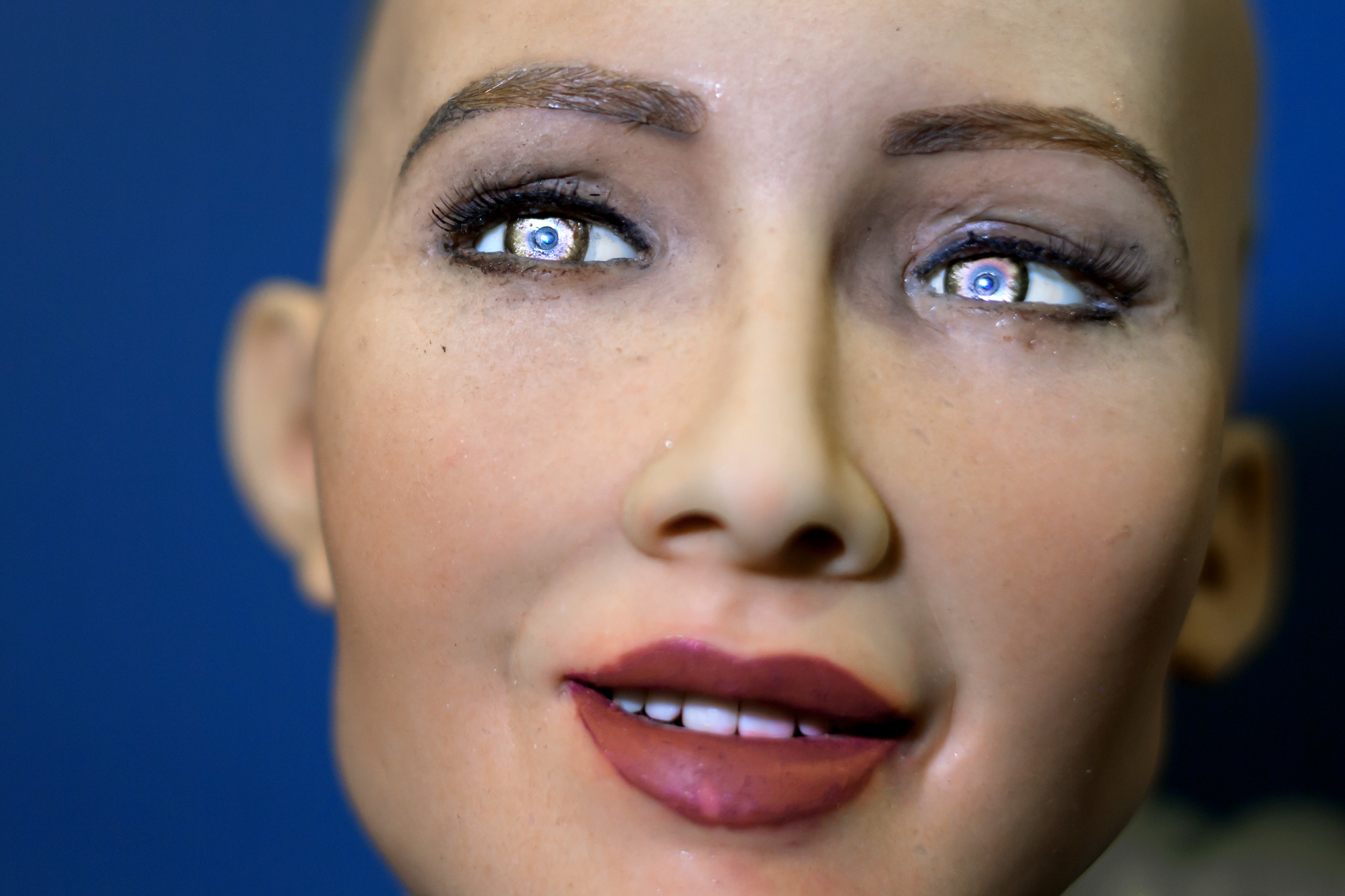 |
| Robot that has been created to express emotions |
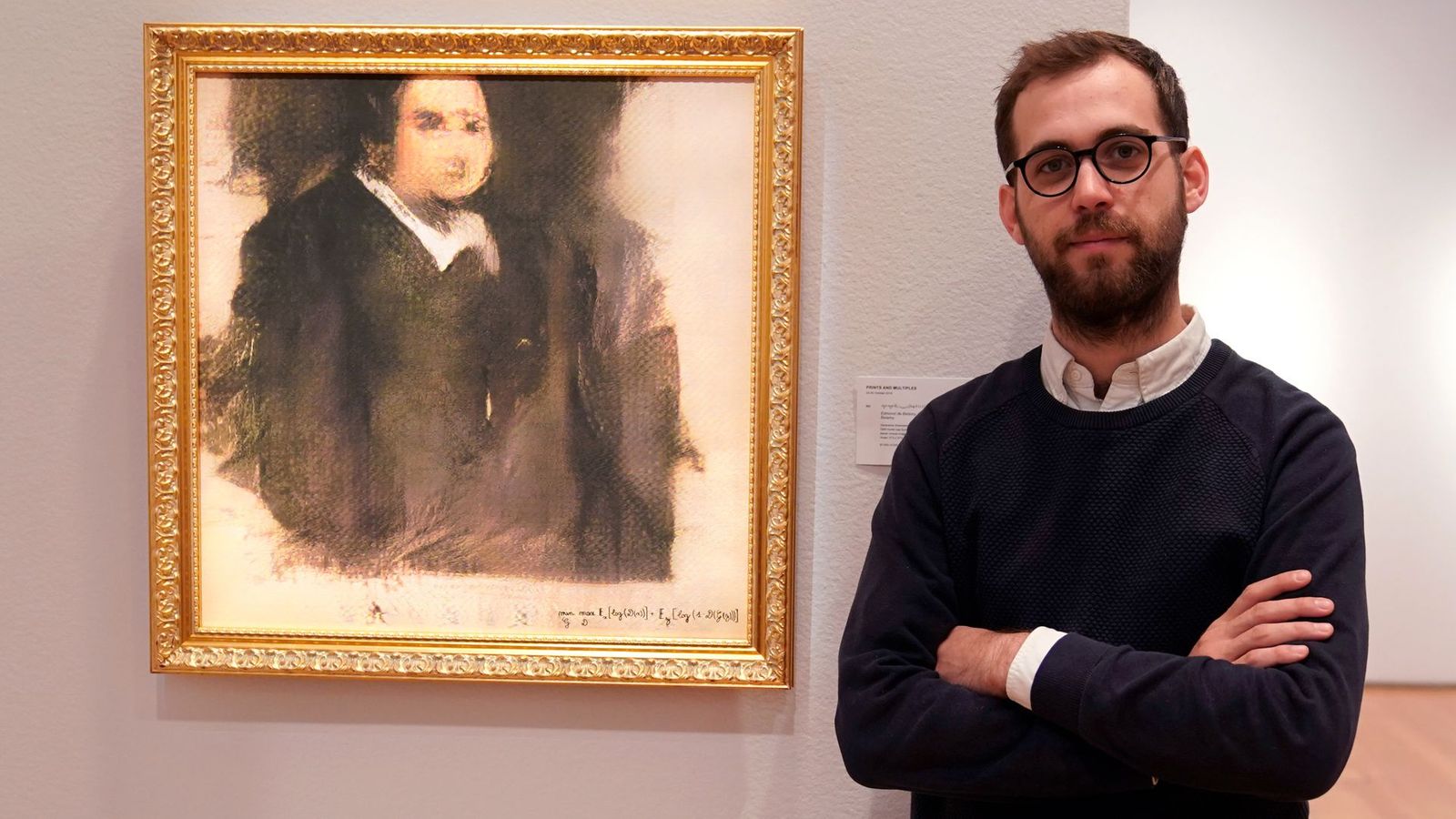 |
| Portrait made by AI |
Bradbury, Ray. Fahrenheit 451. Simon and Schuster, 1950.
Chung, Stephy. “Meet Sophia: The Robot Who Laughs, Smiles and Frowns Just like Us.” CNN, Cable News Network, 1 Nov. 2018, www.cnn.com/style/article/sophia-robot-artificial-intelligence-smart-creativity/index.html.
“Fahrenheit 451.” Wikipedia, Wikimedia Foundation, 11 Apr. 2021, en.wikipedia.org/wiki/Fahrenheit_451.
Hanson, David. “Robots That ‘Show Emotion.’” TED, www.ted.com/talks/david_hanson_robots_that_show_emotion#t-53464.
Osborne, Peter, and Matthew Charles. “Walter Benjamin.” Stanford Encyclopedia of Philosophy, Stanford University, 14 Oct. 2020, plato.stanford.edu/entries/benjamin/#ArtTec.
San Francisco Robotics Society of America (SFRSA), www.robots.org/.
Tsukayama, Hayley. “Dreams of Ray Bradbury: Predictions That Came True.” The Washington Post, WP Company, 6 June 2012, www.washingtonpost.com/business/technology/dreams-of-ray-bradbury-ten-predictions-that-came-true/2012/06/06/gJQAqbs9IV_story.html.


Hi Sanah! I completely agree with your opening statement - I also didn't think much about the connection between art and robotics until this last week. Also, I thought your connection with Ray Bradbury's Fahrenheit 451 was really cool and definitely not one I had thought about. Additionally, I talked about AI briefly in my own blog post as well and I'm also really interested in seeing how AI plays into the intersection between robotics and art in the future.
ReplyDelete