Week 8: Nanotech and Art
I hadn't explored the field of nanotechnology prior to this class, but this week I learned a lot about how nanotechnology is a growing field and has a major influence on art. This week I explored the topic of art conservation and restoration and how nanotechnology has become a part of the conversation. The topic of art conservation and restoration has varying opinions. Some believe that art restoration is good. They say it can be a way for art to restored to the original state that the artist intended it to be in. They also argue that it can help attract more people to appreciate it, and help the artwork last for many years to come. However, others argue that art restoration can be more detrimental than beneficial. These people argue that it can diminish the original quality, it could be going against the artists wishes, and it can erase some history attached with it. Personally, I think that art restoration has more benefits than costs. It allows art to be appreciated for generations, and can help maintain the quality and beauty of the pieces.
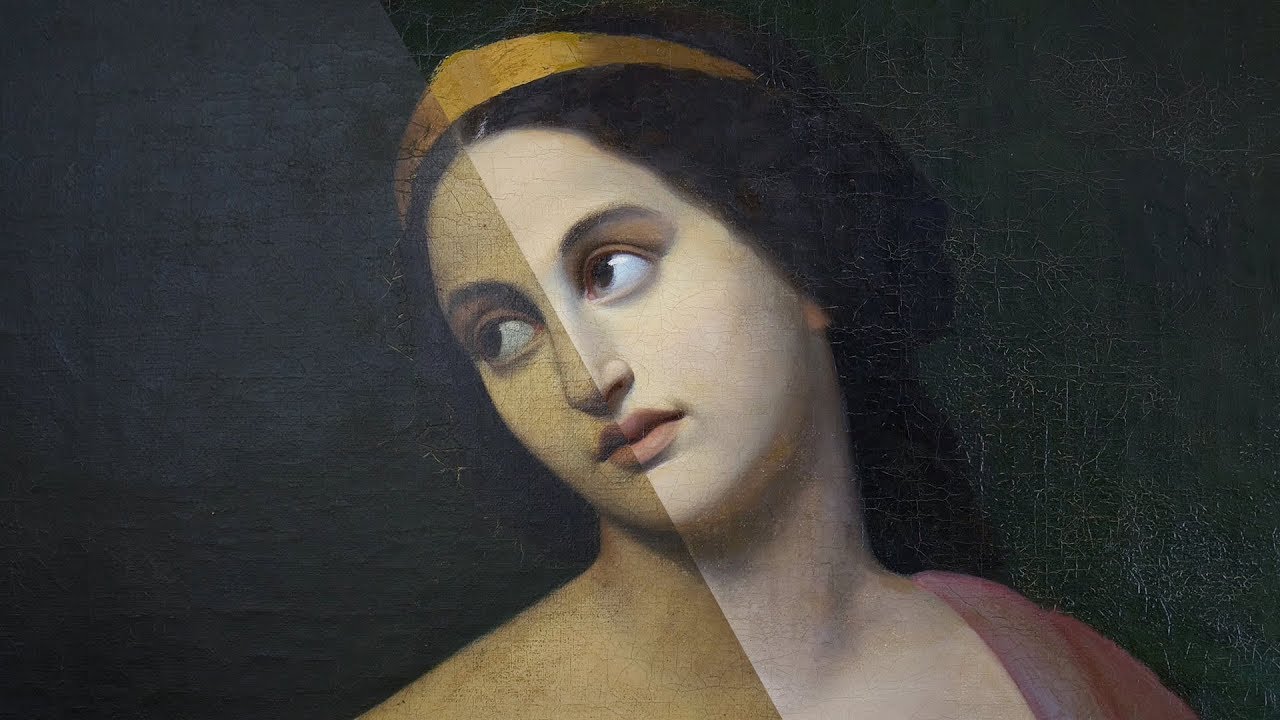 |
| Example of painting that was restored |
Many museums participate in art restoration, and use technology to restore the pieces. New advances in nanotechnology have created new tools to restore art. For example, the Research Center for Colloids and Nanoscience in Italy is creating oil in water droplets called micelles and micro emulsions. These are used to remove dirt and grime from pieces of art and are more environmentally friendly than the older alternatives like petroleum ether. The water in the old in water droplets is used to reduce the surface tension between the two liquids. The oil is used to remove the grime. All of this material is inside the droplet. I think this is a great example of how nanotechnology can be used to help restore art.
 |
| Painting in the Research Center for Colloids and Nanoscience in Italy that used oil in water droplets to restore art |
Another issue that many people who are hesitant to restore art bring up, is that restoration can go wrong. It can end up doing more harm than good to the artwork. For example, synthetic polymers have been used to repair flaky paint. However, these can physically stress the paint, and result in more chipping and flaking. A new nanotechnology has been developed to combat this problem. Restorers have been using a nano-sized container of a water based micro emulsion system, containing water and chemicals called esters. These are a lot safer for the art pieces and used widely. This is another example of how nanotechnology can benefit art restoration.
 |
| Art piece before and after restoration with water based emulsion |
“About CSGI.” CSGI Website, www.csgi.unifi.it/index.php?option=com_content&view=article&id=1&Itemid=2.
“Art Conservation and Restoration.” Encyclopædia Britannica, Encyclopædia Britannica, Inc., www.britannica.com/art/art-conservation-and-restoration.
jbrandtman. “Baumgartner Fine Art Restoration.” YouTube, YouTube, 27 Mar. 2018, www.youtube.com/watch?v=W0MzKWx0GRw.
“John Curtin Gallery.” Art.Base, art.base.co/event/2104-art-in-the-age-of-nanotechnology#5.
Sunipapramanik. “Art Conservation and Nanotechnology: A Wonderful Confluence of Arts and Sciences.” Sustainable Nano, 12 May 2017, sustainable-nano.com/2017/05/12/art-conservation-and-nanotechnology/.
“The Science Behind the Restoration of a Painting.” Invaluable, 12 June 2019, www.invaluable.com/blog/the-science-behind-art-restoration/.
“What Does It Mean To Have A Painting Restored And How Do I Pick A Conservator?” Museum Conservation Institute What Does It Mean to Have a Painting Restored and How Do I Pick a Conservator?, www.si.edu/mci/english/learn_more/taking_care/conservation_meaning.html.


Comments
Post a Comment